Puppy Training in Austin: Classes, Socialization and When to Start
General training information. For aggression, sudden behavior changes or health concerns, see your veterinarian first.
A new puppy in Austin has a lot to take in. There are patio restaurants, trails, summer heat, cedar-lined greenbelts and neighbors walking dogs on every block. The good news is that you can turn all of that into practice, one calm step at a time.
This guide covers puppy training in Austin from the first day home. It explains when to start puppy training classes, what to ask a class provider, how to socialize safely around the city, and how to set up the first weeks at home.
When to Start: Earlier Than Many People Think
Many owners wait until the full vaccine series is done before they do anything social. The American Veterinary Society of Animal Behavior (AVSAB) takes a different view in its puppy socialization position. It says puppy classes can begin before the vaccine series is complete, as long as sensible precautions are in place.
The reasoning is that the early weeks of a puppy's life are a key window for learning about the world. A puppy who is kept home until all shots are finished may miss much of that window. At the same time, an unvaccinated puppy should not be sniffing the ground at a busy dog park.
So the question is not "class or no class." It is "which setting is controlled enough?" Talk to your veterinarian about your puppy's vaccine schedule and your household's risk before you enroll. Your vet knows your puppy's age and health, and we do not.
What Texas Law Says About Rabies
One date is set by law. The Texas Health and Safety Code (Chapter 826) requires dogs to be vaccinated against rabies by 4 months of age, with boosters at intervals set by state rule. The City of Austin also notes that rabies vaccination is required for all dogs under state law. Austin Animal Protection is the rabies control authority for the city and unincorporated Travis County.
Your vet will build the rest of the vaccine plan around that requirement.
What You Need Before You Start
You do not need much gear. Here is a simple starter list.
- A flat buckle collar or a harness that fits, and a standard leash. Choose gear that does not tighten or cause pain.
- Small, soft treats your puppy loves, cut into pea-sized pieces.
- A treat pouch or a small container you can reach quickly.
- A crate or a safe, gated area for rest and for times you cannot watch.
- Chew toys and a few puzzle feeders.
- Enzyme cleaner for accidents.
- Bags for cleanup. The Austin Chronicle, quoting the city code, reports that failing to remove dog waste can carry a fine of up to $500. Check with the City of Austin for the current rule.
- A water bottle and a towel for heat and mud.
- Your vet's vaccine record, which most class providers will want to see.
Step 1: Talk to Your Vet First
Before you book anything, ask your vet three questions.
- Where is my puppy in the vaccine series?
- Which places are fine now, and which should wait?
- Are there any health reasons to hold off on group classes?
Write the answers down. They will guide every step that follows.
Step 2: Choose Puppy Training Classes
Puppy classes in Austin are offered by independent trainers and training businesses. We could not confirm what vaccines any local class requires, so we will not guess. Requirements differ from one provider to the next. Ask each provider directly what vaccines they require, how many shots must be done before the first session, and how they keep the space clean.
Questions to Ask a Class Provider
- Which vaccines and what timing do you require?
- How large are the classes, and are puppies grouped by age or size?
- Do you use only reward-based methods? (You want a clear yes.)
- Are the sessions off-leash play free-for-alls, or structured with breaks?
- What happens if a puppy is overwhelmed and needs a break?
- Is the floor cleaned between classes?
A good class teaches people as much as puppies. Look for short exercises, treat rewards, and an instructor who steps in when play gets too rough.
Credentials You Can Look Up
Dog training is not a licensed profession, so credentials are worth checking. The CCPDT Certified Dog Trainer Directory lists certified trainers by area. These Austin-area trainers appear there or on their own sites, described here only by the credentials they list:
- Karin M. Liebrand, Austin: CPDT-KA, KPA CTP, CTDI, AKC Canine Good Citizen Evaluator and AKC Trick Dog Evaluator.
- Devin K. Pyner, Austin 78749: CPDT-KA.
- Laura A. Fennell, Austin 78745: CPDT-KA.
- Deborah L. (Devi) Puckett of Dog Math Behavior Consulting, Austin 78703 and surrounding communities: CPDT-KA, CBCC-KA and Fear-Free Certified.
- Jen Germann of Dog Possible, Austin: CPDT-KA through CCPDT, per the Dog Possible About page.
This is not a ranking or a recommendation. Contact them, or any provider, and ask what puppy classes they offer, what they require, and what methods they use. Whether a given trainer teaches puppy classes is something you will need to confirm with them.
Step 3: Set Up the First Weeks at Home
Home is where most puppy training happens. A class gives you ideas. Daily practice makes them stick.
Build a Routine
Puppies like predictable days. Aim for regular meal times, regular potty trips, and regular naps. Take your puppy out after waking, after meals, after play and before bed. Go to the same spot and reward right after they finish.
Teach Four Basics
- Name response. Say the name once in a cheerful voice. When your puppy looks at you, give a treat. Repeat in short sessions.
- Sit. Hold a treat at the nose, move it slowly up and back, and reward as the bottom lowers. Add the word once the motion is reliable.
- Come. Start in a small room. Say the cue in a happy voice, back up a step, and reward when they reach you. Never call your puppy to something unpleasant.
- Settle. Reward calm moments on a mat. Over time, a mat can become a signal to relax.
Keep sessions to a few minutes. End while your puppy is still keen.
Crate and Alone Time
Make the crate a pleasant place with meals, chews and quiet naps. Practice short separations early, starting with moments in another room. Slowly build up the time. If your puppy shows distress that does not ease, ask your vet or a certified behavior professional for help.
Bite Inhibition and Chewing
Puppies mouth things. When teeth touch skin, calmly end play for a moment, then offer a toy. Do not scold or use physical corrections. Reward gentle play and chewing on the right items.
Step 4: Socialize in Austin, Carefully
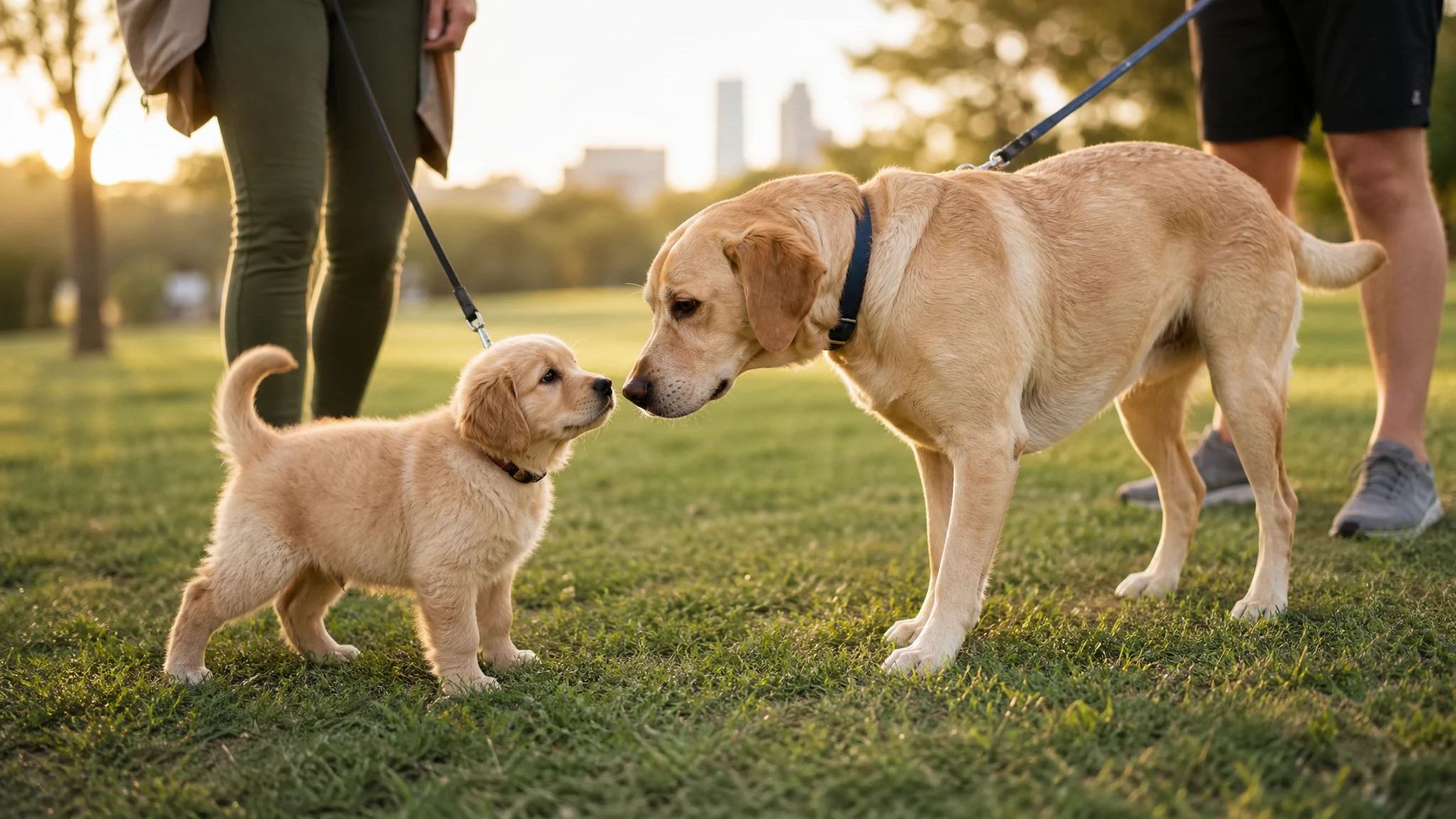
Socialization means helping your puppy feel safe around new sights, sounds, surfaces and people. It does not mean forcing meetings. Let your puppy choose the pace, and pair each new thing with treats.
Start With Low-Risk Outings
Until your vet says otherwise, think about carrying your puppy or using a stroller or wagon. Try these:
- Sit on a bench near a quiet sidewalk and watch bikes, scooters and strollers go by.
- Let your puppy see a patio from a distance and settle on a blanket.
- Visit a friend's home with a vaccinated, calm adult dog.
- Meet new people one at a time, with treats offered at your puppy's pace.
- Practice car rides that end somewhere fun, not only at the vet.
Parks and Off-Leash Areas
Austin has several off-leash spots listed by the city and its partners. They include the Onion Creek Greenbelt off-leash area (6800 Onion Creek Drive), the Mary Moore Searight Metro Park off-leash trail (9500 S 1st St.), the Emma Long Metro Park Turkey Creek Trail (2100 City Park Rd.), Walnut Creek Metropolitan Park (12138 N Lamar Blvd), Red Bud Isle (3401 Red Bud Trl.) and Auditorium Shores at Town Lake.
These places are busy with dogs of unknown health and manners. For a young, partly vaccinated puppy, they are usually not the place to begin. Ask your vet when your puppy is ready.
When the time comes, know the rules. The City of Austin Parks and Recreation dog parks page lists these for off-leash areas: leash your dog to and from the area, keep your dog within sight and sound control, keep dogs in heat out, make sure your dog has its rabies vaccination, and clean up waste. Parks generally open 5 a.m. to 10 p.m. unless posted otherwise.
Rules can differ by site. The Emma Long park page, for example, says pets must remain on leash even though its Turkey Creek Trail is listed as off-leash, so confirm the posted signs when you arrive. Rules for Walnut Creek, Red Bud Isle and Auditorium Shores were not available to us, so check with Austin Parks and Recreation.
Know the Leash Rules
Austin City Code section 3-4-1 requires an owner or handler to keep a dog under restraint in public areas, except in the areas listed in section 3-4-4. Tethering a dog within city limits is prohibited by city ordinance. Check with the City of Austin on leash length, as we could not confirm a number.
Watch for Austin Weather and Water Hazards
Heat is a real issue here. City of Austin Animal Services advises that pavement can quickly burn paw pads, that exercise should be limited on hot days, and that pets should never be left in a car, even with windows down. Very young dogs and short-muzzled breeds are listed as higher risk. Plan puppy outings for cooler parts of the day, and test the ground with the back of your hand.
Cold snaps matter too. The city advises bringing pets inside, keeping walks short and checking paws for ice balls.
Water needs care. In August 2019, city officials told residents to keep pets out of Lady Bird Lake after dogs died and early tests pointed to blue-green algae, according to KUT public radio. The advice was to bathe a dog right away if it enters the water and to see a vet for signs such as heavy drooling, vomiting or diarrhea. That was a 2019 event, and we could not confirm a current advisory, so check with the City of Austin before letting your puppy near any lake or creek.
Tips for Better Results
- Reward often and early. Treats make good behavior worth repeating.
- Keep new experiences short. Two happy minutes beat twenty stressful ones.
- Watch body language. Tucked tail, lip licking, yawning, hiding or turning away mean "too much." Add distance and give a break.
- Practice in many places. A skill learned in the kitchen needs rehearsal in the yard, on the porch and then on the sidewalk.
- Use part of the daily meal as training treats.
- Rest matters. Puppies need lots of sleep, and a tired puppy has a harder time learning.
Common Mistakes to Avoid
- Waiting too long. Delaying all learning until the shots are done can mean missing the early window. Ask your vet about safe options.
- Going too big, too fast. A crowded festival or off-leash park can overwhelm a young puppy.
- Letting rough play run on. Step in if a puppy is being bullied or is hiding.
- Using harsh methods. Shock, prong or choke collars, scruffing, alpha rolls and dominance-based approaches can cause fear and are not in line with AVSAB guidance. Stick to rewards.
- Skipping heat checks. Hot pavement and parked cars are real dangers in Austin.
- Expecting a finished dog. A puppy class is a start. Adolescence often brings setbacks.
What Results Can You Expect?
Every puppy is different, so no one can promise a timeline. With patient, regular practice, many owners find that their puppy gets better at sit, name response and walking calmly on a leash over the first several weeks. Potty training often improves with a steady schedule, though accidents are normal along the way.
Socialization may help your puppy feel more at ease with new people, places and sounds, but it does not rule out fear or reactivity later. Breed, genetics, health and past experiences all play a part. If your puppy seems very fearful, check in with your vet.
When to Call a Professional
See your veterinarian for any sudden change in appetite, energy, stools or behavior, or any sign of illness. Pain and illness can look like "bad behavior."
If your puppy growls, snaps or bites people, do not wait. Talk to your veterinarian and a certified behavior professional. Per the sources we reviewed, Amy Fitzsimmons of Dog Possible in Austin lists IAABC-CDBC, CBCC-KA and CSB-D credentials, and Devi Puckett of Dog Math Behavior Consulting lists CBCC-KA. Contact them directly to ask about their services.
Adopting a Puppy in Austin
If you are still looking for a puppy, Austin has local shelters and rescues. They include the municipal Austin Animal Center and the nonprofits Austin Pets Alive! and Austin Humane Society. Ask any of them what support they offer new adopters.
Sources
- City of Austin, Austin Animal Services, Animal Protection
- City of Austin Parks and Recreation, Dog Parks: Off-Leash Areas
- City of Austin Animal Services, Weather safety for pets
- City of Austin Parks and Recreation, Onion Creek Metropolitan Park
- City of Austin Parks and Recreation, Trail Directory
- Austin Parks Foundation, Parks for Pups
- Texas Health and Safety Code Sec. 826.021
- Austin Chronicle, The Common Law
- KUT public radio, Lady Bird Lake pet advisory (August 2019)
- CCPDT Certified Dog Trainer Directory
- Dog Possible, About page
- Dog Math Behavior Consulting
- Austin Animal Center
- Austin Pets Alive!
- Austin Humane Society