How Much Does Dog Training Cost in Austin?
General training information. For aggression, sudden behavior changes or health concerns, see your veterinarian first.
If you are wondering how much dog training costs in Austin, here is the honest answer up front: we could not find published dog training prices from Austin trainers that we can quote with confidence. So we will not give you an average or a range. Any number we made up would only set you up for a surprise.
What we can do is show you how to get a real, written price from the trainers you are considering, what makes dog training prices go up or down, and how to compare quotes fairly. Think of this as a short project with clear steps.
Why Austin dog training prices are hard to pin down
Many trainers do not post prices online. They want to hear about your dog first, because a shy rescue and a bouncy adolescent can need very different plans. That means the number you see on one website may not match what the trainer down the road charges for something that looks similar but is not.
Few Austin prices are published in the sources we rely on, and we do not estimate a local average. The best price information will come straight from the trainer, in writing, for your dog's specific needs.
What you will need
- A notebook or a notes app for recording quotes side by side.
- A short list of your goals, such as loose leash walking, a reliable recall, calmer greetings or house manners.
- Your dog's rabies vaccination record. Texas Health and Safety Code chapter 826 requires dogs to be vaccinated against rabies by 4 months of age, with boosters at intervals set by state rule, and many trainers will ask to see proof.
- Any other vaccination records. The vaccines a puppy class requires vary by trainer, so ask the trainer rather than guessing.
- A list of your dog's health and behavior history, including past bites or scuffles, fears and any medical concerns.
- Your weekly schedule, so you can tell how many sessions you can really attend.
- A small budget range you are comfortable with, written down before you start calling.
Step 1: Name the problem you want to solve
Price follows the job. A puppy learning sit and name recognition is a different project from an adult dog who panics when the doorbell rings. Write down the two or three things that bother you most, and one thing you would love to do together, like a relaxed walk around the neighborhood.
A clear goal helps a trainer give you an accurate quote the first time. It also keeps you from paying for extras you do not need.
Step 2: Rule out a medical cause first
Sudden changes in behavior can come from pain or illness. If your dog has started snapping, avoiding stairs, having accidents or acting very differently, see your veterinarian before you spend anything on training. Your vet can also tell you whether your dog is healthy enough for the activities in a class.
If your dog's behavior involves aggression toward people, see a veterinarian and a certified behavior professional. Please do not treat that as a basic obedience problem. It deserves a careful, individual plan.
Step 3: Understand the formats that drive price
Format is one of the biggest reasons quotes differ. Most trainers offer some mix of these:
- Group classes. Several dogs and owners learn together over a set number of weeks. These usually cost less per session because the trainer's time is shared. They can be a good fit for puppies and for basic skills, but a busy room can be hard for a nervous dog.
- Private lessons. One-on-one time with the trainer, often at your home or another location. These tend to cost more per session because the attention is all yours. They can suit specific problems and busy schedules.
- Packages. A bundle of sessions sold together. Ask what happens if you miss one or need to reschedule.
- Board and train or day training. Your dog stays with a trainer or is worked with during the day. Ask exactly what methods are used, how much time your dog spends being trained versus resting, and how the skills are handed over to you. The handoff matters, because your dog still has to learn to work with you.
- Behavior consultations. A longer first appointment, often for fear, anxiety or reactivity, usually followed by a written plan and follow-up sessions.
When you compare quotes, compare the format first. A low class price and a higher private-lesson price may both be fair, but they are not the same service.
Step 4: Understand how credentials affect cost
Trainer credentials and experience can affect what a trainer charges. In Texas, dog training is not something we found a single official license for, so credentials usually come from independent certifying groups. Here is how a few Austin-area professionals describe themselves, so you can see what the letters look like. This is not a ranking, and we are not saying anyone is a better fit than anyone else.
- The CCPDT Certified Dog Trainer Directory lists Karin M. Liebrand in Austin with CPDT-KA, KPA CTP, CTDI, and AKC Canine Good Citizen and Trick Dog Evaluator credentials.
- The same directory lists Devin K. Pyner (Austin, 78749) and Laura A. Fennell (Austin, 78745), each with CPDT-KA.
- Deborah L. (Devi) Puckett of Dog Math Behavior Consulting is listed in the CCPDT directory with CPDT-KA, CBCC-KA and Fear-Free Certified credentials, serving Austin 78703 and surrounding communities.
- Jen Germann of Dog Possible states on the Dog Possible about page that she holds the CPDT-KA through CCPDT. That page also lists Amy Fitzsimmons with IAABC-CDBC, along with CBCC-KA and CSB-D credentials.
We do not have prices for any of these professionals, so please contact them directly for current fees, formats and availability. You can also look up any trainer in the CCPDT directory to confirm a certification is current.
One note on behavior credentials: CBCC-KA and IAABC-CDBC are different credentials from different organizations. If your dog has serious fear or aggression, ask any professional what their credential means and how they handle cases like yours.
Step 5: Ask each trainer the same questions
Use the same list every time so the answers line up in your notes. Ask:
- What is the total cost, and what exactly does it include?
- How many sessions are there, and how long is each one?
- Where do sessions take place, and is there a travel fee?
- What happens if I miss a session or need to reschedule?
- Are there extra costs for equipment, materials or follow-up support?
- What vaccinations or health records do you require?
- What training methods do you use? Can you describe a typical session?
- Do you offer a refund or partial credit if the plan is not a good match? (Not every trainer does, and that is worth knowing.)
- What will I practice at home between sessions, and how much time will it take each day?
Get the answers in an email or written agreement so you can refer back to them.
Step 6: Check that the methods are humane
Price should never be the only filter. The American Veterinary Society of Animal Behavior (AVSAB) supports reward-based training, which means teaching your dog what to do and rewarding it. Look for trainers who use treats, toys, praise and clear communication.
Walk away from anyone who recommends shock, prong or choke collars, alpha rolls, scruffing or being the "dominant" one. These methods can increase fear and stress, and they can damage the trust between you and your dog. A cheaper program built on them is not a bargain.
Step 7: Compare quotes side by side
Once you have two or three written quotes, make a simple table in your notes with these columns: format, number of sessions, session length, total cost, what is included and what the trainer says about methods. Then work out the cost per session and what you get for it.
| What to compare | Why it matters |
|---|---|
| Format (group, private, board and train) | Group classes share the trainer's time, so they may be priced differently from one-on-one work. |
| Number and length of sessions | A package that sounds cheap may include fewer or shorter sessions. |
| Credentials and experience | Can affect pricing, and tells you how the trainer was assessed. |
| Location and travel | Home visits may carry a travel fee, and the city is large, so ask. |
| Follow-up support | Some plans include check-ins by email or phone, and others charge separately. |
Step 8: Plan for the costs outside the lesson
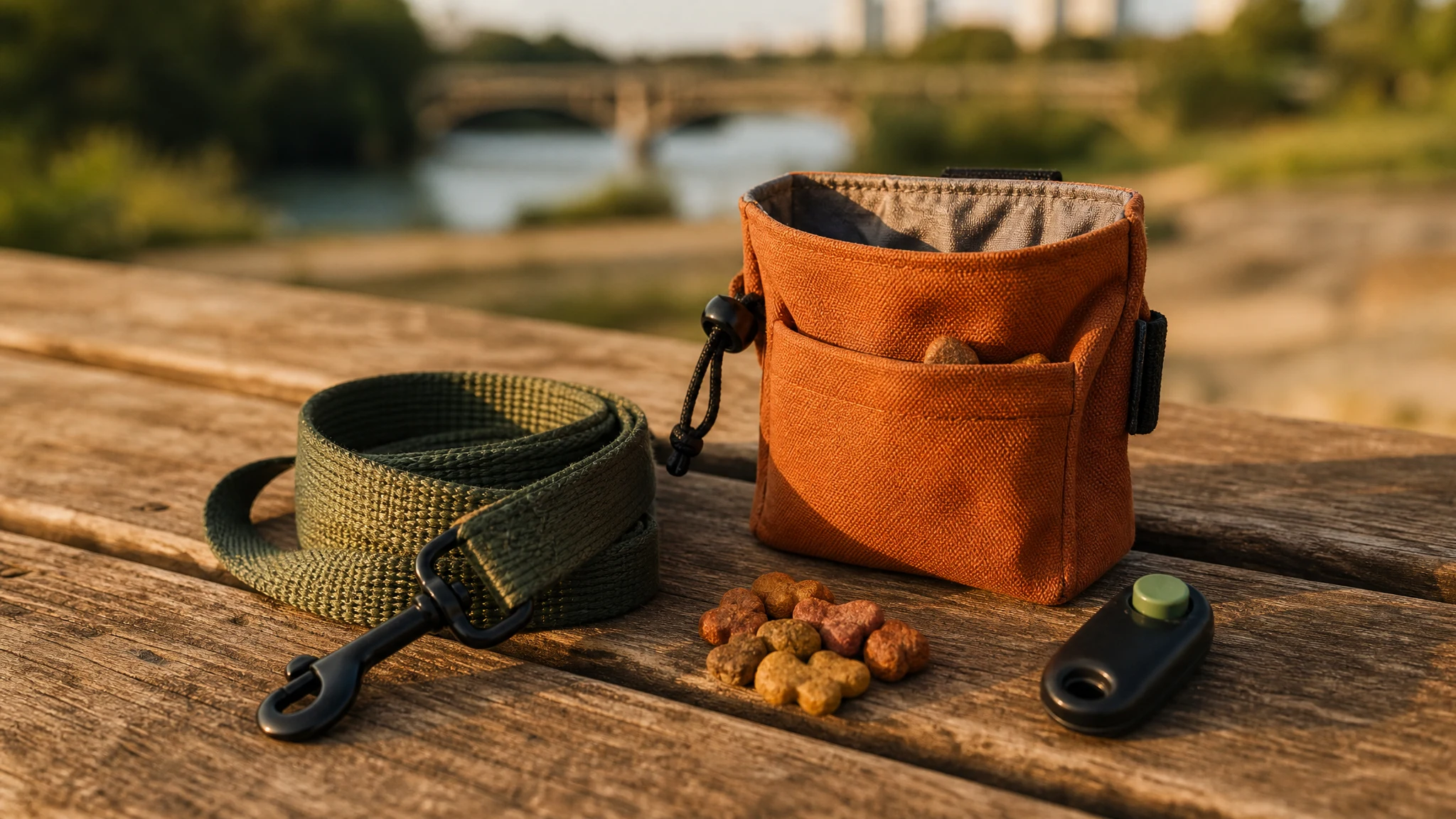
Training itself is only part of the picture. You may also need treats, a flat collar or a harness, a leash, a treat pouch and a mat. Keep your gear simple and gentle.
Practice is where the learning happens, so factor in your own time. A few short sessions a day usually work better than one long one.
Austin conditions matter too. The City of Austin Animal Services advises limiting exercise on hot days, warns that pavement can quickly burn paw pads and says pets should never be left in a car, even with the windows down. Short-muzzled breeds, very young or old dogs, overweight dogs and dogs with heart or respiratory disease are at higher risk. If a session is outside in summer, ask the trainer how they handle heat, such as early morning or evening slots.
The same city page advises keeping walks short in freezing weather and checking paws for ice balls.
Step 9: Know where you can practice for free
Once you have a plan, you can cut some costs by practicing in places that cost nothing. Austin City Code section 3-4-1 requires an owner or handler to keep a dog under restraint in public areas, except in the places listed in section 3-4-4. Tethering dogs within city limits is also prohibited by city ordinance. So for most practice outside your yard, your dog should be on a leash.
The City of Austin Parks and Recreation dog parks page lists city-wide rules for designated off-leash areas. These include leashing your dog to and from the area, keeping your dog within sight and sound control, keeping dogs in heat out, having your dog vaccinated for rabies and cleaning up waste. Parks generally open from 5 a.m. to 10 p.m. unless otherwise posted.
Off-leash options listed by the City or the Austin Parks Foundation include the Onion Creek Greenbelt, the Mary Moore Searight Metro Park off-leash trail, Walnut Creek Metropolitan Park, Red Bud Isle and Auditorium Shores. The Emma Long Metro Park Turkey Creek Trail is listed as an off-leash trail in the City's trail directory, but the park's own page says pets must remain on leash, so check the posted rules on site.
Off-leash areas can be busy and exciting, which is hard for a dog who is still learning. Build skills in quiet places first, and confirm current rules with the City before you go.
A caution on water: in August 2019, city officials told residents to keep pets out of Lady Bird Lake after dogs died, and early tests pointed to toxic blue-green algae, according to KUT public radio. We could not confirm a current advisory, so check with the City before letting your dog swim. If your dog does go in the water, bathe them right away, and call a veterinarian if you see excessive drooling, vomiting or diarrhea.
Step 10: Ask local shelters about resources
If you adopted your dog recently, the place you adopted from may have information on training support. The Austin Animal Center, Austin Pets Alive! and the Austin Humane Society are all in Austin. We do not have details about what each one offers or what it costs, so check with them directly. Do not assume they run classes.
Common mistakes to avoid
- Choosing on price alone. A lower quote may include fewer sessions or methods you would not be comfortable with.
- Skipping the written agreement. Verbal promises are easy to forget. Get the details in writing.
- Expecting a trainer to fix everything in one session. You are learning too, and practice at home matters.
- Ignoring pain or illness. See your vet first when behavior changes suddenly.
- Accepting guarantees. Behavior depends on your dog, your household and your practice. Be cautious with anyone promising specific results.
- Treating a serious behavior problem as a class issue. Aggression toward people needs a veterinarian and a certified behavior professional.
Tips for getting the most from your money
- Start with the skill that affects daily life most, such as loose leash walking or settling on a mat.
- Ask whether you can watch a class before signing up.
- Record short videos of your practice to show your trainer.
- Keep sessions short and upbeat. Many dogs learn better in a few minutes at a time.
- Use part of your dog's normal meals as training rewards if your trainer or vet says that is appropriate.
What to expect
With steady, reward-based practice, many dogs show some improvement within a few weeks, though the pace varies with age, history, temperament and how often you practice. Puppies often pick up basics quickly but need repetition. Adult dogs with long-standing habits or fears may take more time. Results are not guaranteed, and setbacks are normal.
A realistic goal is progress you can see, like a dog who checks in with you more on walks, rather than perfection. If you are not seeing movement after a reasonable stretch, talk with your trainer about adjusting the plan.
Final thoughts
There is no single number to quote for dog training prices in Austin, and anyone offering an average without a source is guessing. The most reliable path is simple: define your goal, rule out medical causes, ask a few qualified trainers the same questions and compare written quotes. That will tell you far more about your own dog training cost in Austin than any general figure could.
Sources
- CCPDT Certified Dog Trainer Directory, Karin M. Liebrand
- CCPDT Certified Dog Trainer Directory, Devin K. Pyner
- CCPDT Certified Dog Trainer Directory, Laura A. Fennell
- CCPDT Certified Dog Trainer Directory, Deborah L. (Devi) Puckett
- Dog Possible, About page
- City of Austin Parks and Recreation, Dog Parks: Off-Leash Areas
- City of Austin Parks and Recreation, Trail Directory
- Austin Parks Foundation, Parks for Pups
- City of Austin Animal Services, Weather safety for pets
- City of Austin, Austin Animal Services, Animal Protection
- Texas Health and Safety Code Sec. 826.021
- KUT public radio, Lady Bird Lake pet advisory (August 2019)
- Austin Animal Center
- Austin Pets Alive!
- Austin Humane Society