Adopted a Dog in Austin? A 30-Day Training Plan
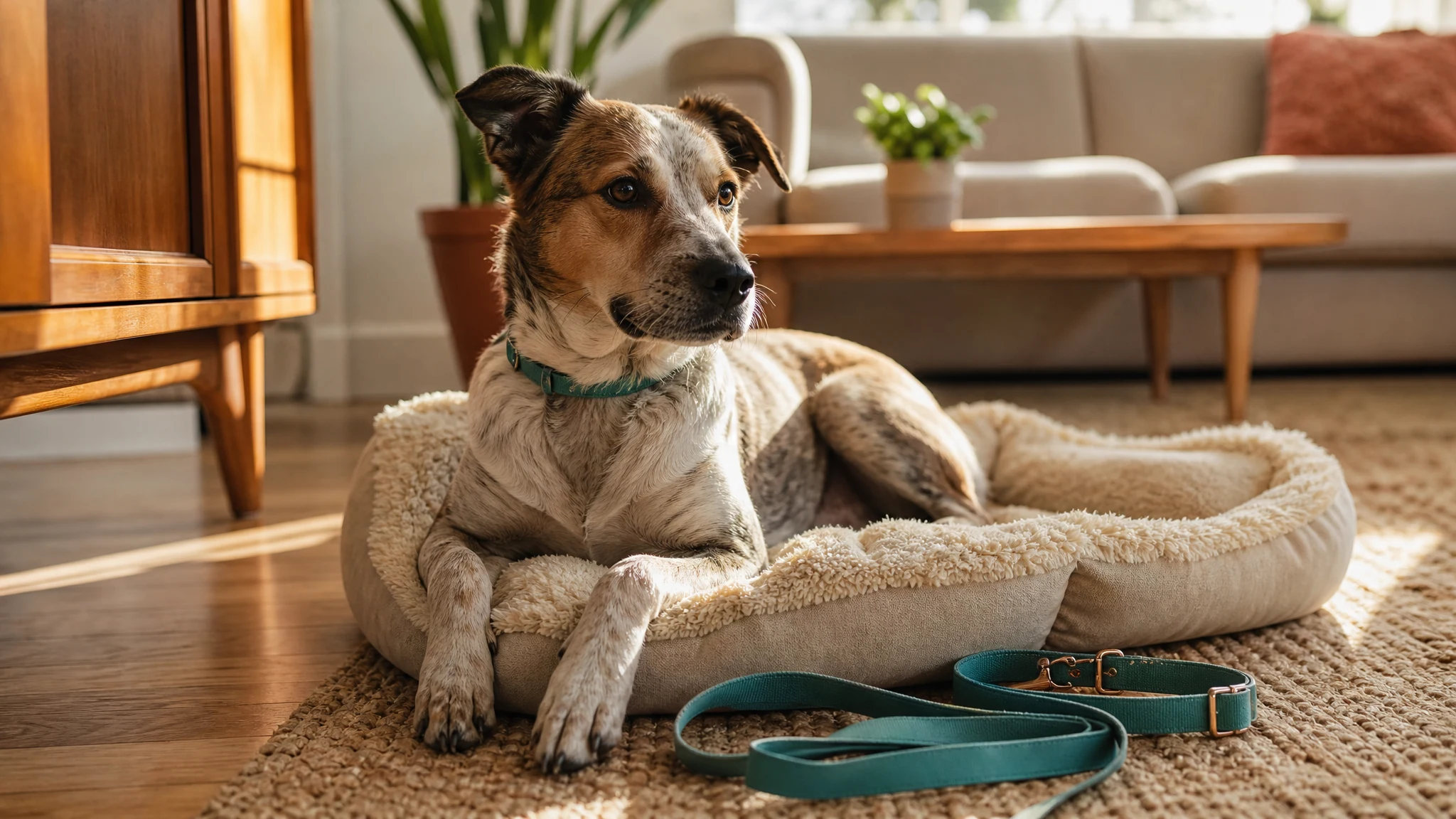
General training information. For aggression, sudden behavior changes or health concerns, see your veterinarian first.
You signed the papers, loaded your new dog into the car, and now the real work begins. The first month is less about teaching tricks and more about helping a dog feel safe in a brand new life.
This plan walks you through training a rescue dog week by week. It covers decompression, routine, house training, name and recall, and learning to be alone. It also points out a few Austin details that matter, like heat, leash rules and where to find off-leash space.
Every dog moves at a different pace. Treat the weeks as a guide, not a deadline, and repeat any step your dog needs more time with.
Where Austin adopters often start
Many people in Austin begin at one of three places: Austin Animal Center, which is run by Austin Animal Services, and the nonprofits Austin Pets Alive! and Austin Humane Society.
Whichever you chose, ask staff what they know about your dog before you leave. Useful questions include how your dog reacted to handling, other dogs, kids and being left alone, and what food your dog has been eating. If they do not know something, that is fine. Write down what you do learn and watch for the rest.
Materials you will need
- A flat collar or a well-fitted harness, plus ID tags with your current phone number
- A standard leash. Austin City Code section 3-4-1 requires dogs to be under restraint in public areas unless the area is designated off-leash, so a leash comes with you on every outing.
- Small, soft treats your dog loves, cut to pea size
- The food your dog was eating at the shelter or foster home, so you can switch slowly
- A crate or a gated resting area, with a comfy bed
- Chew items and a food puzzle or lick mat
- Enzymatic cleaner for accidents
- A treat pouch, poop bags and a notebook for tracking meals, potty trips and sleep
Please skip shock, prong and choke collars. The American Veterinary Society of Animal Behavior (AVSAB) supports reward-based training, and a newly adopted dog who is already unsure of the world does not need pain or fear added to it.
Before day one: the legal and health basics
Texas state law (Health and Safety Code chapter 826) requires dogs to be vaccinated against rabies by 4 months of age, with boosters at intervals set by state rule. The City of Austin also says rabies vaccination is required for all dogs. Ask the shelter for your dog's records, and check with your veterinarian about what your dog needs next.
Tethering dogs within Austin city limits is prohibited by city ordinance, so plan on a fenced yard, a leash held by a person, or indoor time rather than a tie-out. For any other local rule, such as licensing questions, check with Austin Animal Services directly.
Book a vet visit early in the first month. If your dog has any sign of illness, a sudden change in appetite, or pain, call the veterinarian before you start any training.
Week 1: Decompress and set the routine
The first week is about calm. Your dog may be tired, shut down, jumpy or oddly perfect. Many rescue dogs behave differently once they settle in, so keep your expectations low and your patience high.
Step 1: Keep the world small
Limit your dog to one or two rooms and a short, quiet yard or neighborhood walk. Skip dog parks, busy patios, visitors and car trips that are not necessary. Too much too soon is one of the most common reasons new adoptions struggle.
Step 2: Create a safe spot
Set up a bed or crate in a low-traffic corner. Toss treats into it and let your dog choose when to go in. Never force your dog into the space or use it as punishment. Let anyone in the household, especially children, know to leave your dog alone when resting there.
Step 3: Build a predictable day
Feed, walk and rest at roughly the same times each day. Predictability helps an anxious dog relax. Write the schedule on a card and put it on the fridge so everyone follows it.
Step 4: Start with easy wins
Reward calm behavior. When your dog lies down on their own, quietly drop a treat nearby. Hand out treats for looking at you, for settling and for choosing to come near you. You are teaching your dog that good things happen around you.
Common mistake: Meeting every friend and neighbor in week one. Wait. Introduce people slowly, one at a time, and let your dog approach them.
Week 2: House training and handling
Accidents are normal, even for dogs who were house trained before. A new home smells different and the rules are unfamiliar. Plan as if your dog knows nothing and be pleasantly surprised if they do.
Step 5: Take frequent potty trips
Go out first thing in the morning, after meals, after naps, after play and before bed, and any time you see sniffing in circles. Walk to the same spot on a leash, stand quietly, and wait a few minutes.
Step 6: Reward outside, right away
The moment your dog finishes, say a cheerful word and give a treat. Reward within a couple of seconds so your dog connects the treat with going outside. Bring the treats with you every time.
Step 7: Supervise, then confine
When you cannot watch your dog, use the crate, a gated area, or a tether held by you. A dog who never has the chance to have an accident indoors learns faster. If an accident happens, clean it with an enzymatic cleaner and move on. Never punish or scold afterward, since your dog will not connect it to the mess and may start hiding when they need to go.
Step 8: Practice gentle handling
Touch your dog's paws, ears and collar briefly, then give a treat. Keep sessions short, a minute or less. This makes vet visits and grooming easier later.
Common mistake: Rubbing a dog's nose in an accident. It does not teach anything useful and can damage trust.
Week 3: Name, focus and recall
By now your dog may be showing more of their personality. This is a good moment to begin simple lessons, using short sessions of about five minutes, a few times a day.
Step 9: Teach the name game
Say your dog's name once in a happy voice. When your dog looks at you, say "yes" and give a treat. Repeat ten times in a quiet room. Never use the name for scolding. If your dog came with a shelter name you do not love, you can choose a new one and pair it with treats the same way.
Step 10: Build recall indoors
Start in a hallway or small room. Say your recall word once, such as "come," in a bright voice, step back, and reward heavily when your dog arrives. Practice at short distances first, then add the yard, always on a long line or in a secure space.
Step 11: Add easy cues
Teach "sit" and "look at me" with a treat lure. Keep it fun. Stop while your dog is still interested.
Step 12: Go on calm leash outings
Walk quiet streets and reward your dog for staying near you. If your dog pulls, stop and wait until the leash loosens, then walk on. Austin summers are hard on dogs, so the City of Austin Animal Services weather safety advice is worth following: pavement can quickly burn paw pads, exercise should be limited on hot days, and pets should never be left in a car even with the windows down. Walk early or late, and bring water. Very old, very young, overweight and short-muzzled dogs, and dogs with heart or respiratory disease, are at higher risk.
In freezing weather, the city advises bringing pets inside, keeping walks short and checking paws for ice balls.
Common mistake: Calling your dog for things they dislike, such as a bath or ending a game. Keep your recall word for good things.
Week 4: Alone time and widening the world
Separation struggles are common in newly adopted dogs. The goal this week is to teach your dog, in small steps, that being alone is safe and that you always come back.
Step 13: Practice tiny absences
Give your dog a chew or lick mat in the resting spot. Walk out of the room for a few seconds, return, and calmly reward. Slowly extend to 30 seconds, then a minute, then several minutes. If your dog becomes upset, you went too fast. Go back to an easier step.
Step 14: Keep departures boring
Skip long goodbyes and big greetings. A calm, quiet exit and return helps your dog stay relaxed.
Step 15: Add exercise and thinking games
Scatter some of your dog's food on the floor or use a puzzle toy. Mental work tires a dog out in a healthy way.
Step 16: Explore Austin carefully
Once your dog is settled, you can try new places. The City of Austin lists off-leash spots including Onion Creek Greenbelt, the Mary Moore Searight Metro Park off-leash trail and the Emma Long Metro Park Turkey Creek Trail. The Austin Parks Foundation also lists Walnut Creek Metropolitan Park, Red Bud Isle and Auditorium Shores.
City-wide off-leash rules from Austin Parks and Recreation include leashing your dog to and from the area, keeping your dog within sight and sound control, no dogs in heat, rabies vaccination required, and cleaning up waste. Rules can differ by park. For example, the Emma Long park page says pets must remain on leash, so confirm the posted rules on site, and check with Austin Parks and Recreation for hours and details at the other areas.
Be honest about whether your dog is ready. A dog with a weak recall or a nervous streak may do better on a leash at a quiet trail first. Off-leash areas can be overwhelming for a dog who has only been home a few weeks.
Be careful with water, too. In August 2019, city officials advised keeping pets out of Lady Bird Lake after dogs died and preliminary tests pointed to blue-green algae that can release a neurotoxin, according to KUT public radio. No current advisory was confirmed, so check with the City of Austin before letting your dog swim. If your dog does enter questionable water, bathe them right away and see a veterinarian for symptoms such as heavy drooling, vomiting or diarrhea.
Tips for the whole month
- Use the 3-3-3 idea loosely. Many rescue dogs seem to need a few days to decompress, a few weeks to learn the routine, and a few months to feel fully at home. Do not be discouraged if your timeline runs longer.
- Keep sessions short. Five minutes of good practice beats twenty minutes of frustration.
- Track patterns. Note what triggers barking, fear or overexcitement. Patterns point to solutions.
- Be consistent as a household. Everyone should use the same cue words and follow the same rules.
- Be mindful of noise. Austin has a city code about noisy animals, so if your dog barks a lot when left alone, work on alone-time steps early and check with Austin Animal Services about the specific rule.
Common mistakes to avoid
- Doing too much too soon, such as dog parks, crowds and houseguests in the first week
- Punishing accidents or fearful behavior
- Using harsh tools or dominance methods, which AVSAB advises against
- Leaving a dog in a parked car or on hot pavement
- Expecting a perfect recall after a few days
- Skipping rest. Adult dogs often need 14 or more hours of sleep, so quiet time is part of training.
What you can expect by day 30
With steady practice, many adopted dogs begin to settle into a routine, respond to their name more reliably, and have fewer accidents. Some dogs may start to relax when left alone for short periods. Results vary a lot depending on a dog's history, age and temperament, and it is common to see setbacks along the way.
You may not have a polished dog at day 30. You may, however, have a dog who trusts you more and a household that runs more smoothly. That is a strong foundation.
When to get help
Call your veterinarian if you see sudden changes in appetite, repeated accidents that do not improve, limping, scratching, vomiting or low energy. Behavior can have medical causes.
If your dog growls, snaps or bites people, or shows severe fear or panic, talk to a veterinarian and a certified behavior professional. Do not try to handle aggression on your own.
The credentials listed publicly for Austin-area behavior professionals include Amy Fitzsimmons of Dog Possible (IAABC-CDBC, also CBCC-KA and CSB-D) and Deborah (Devi) Puckett of Dog Math Behavior Consulting (CBCC-KA). Check their sites for current services and availability: Dog Possible and Dog Math Behavior Consulting.
For a group class or private lessons after your first month, see our guide to dog training in Austin: classes, costs and how to choose. Whoever you pick, look for reward-based methods and ask about their approach before you sign up.
Sources
- City of Austin, Austin Animal Services, Animal Protection
- City of Austin Parks and Recreation, Dog Parks: Off-Leash Areas
- City of Austin Animal Services, Weather safety for pets
- City of Austin Parks and Recreation, Trail Directory
- City of Austin Parks and Recreation, Onion Creek Metropolitan Park
- Austin Parks Foundation, Parks for Pups
- Texas Health and Safety Code Sec. 826.021
- KUT public radio, August 5, 2019, on Lady Bird Lake
- Austin Animal Center
- Austin Pets Alive!
- Austin Humane Society